
Is Invisalign better than traditional braces? Many people visiting a dentist in university Calgary often ask this question. Both treatments help straighten teeth, but they work in different ways. The best option depends on your teeth’s needs, comfort, and daily lifestyle.
Understanding how each option works can help make the decision easier and more confident.
What is Invisalign?
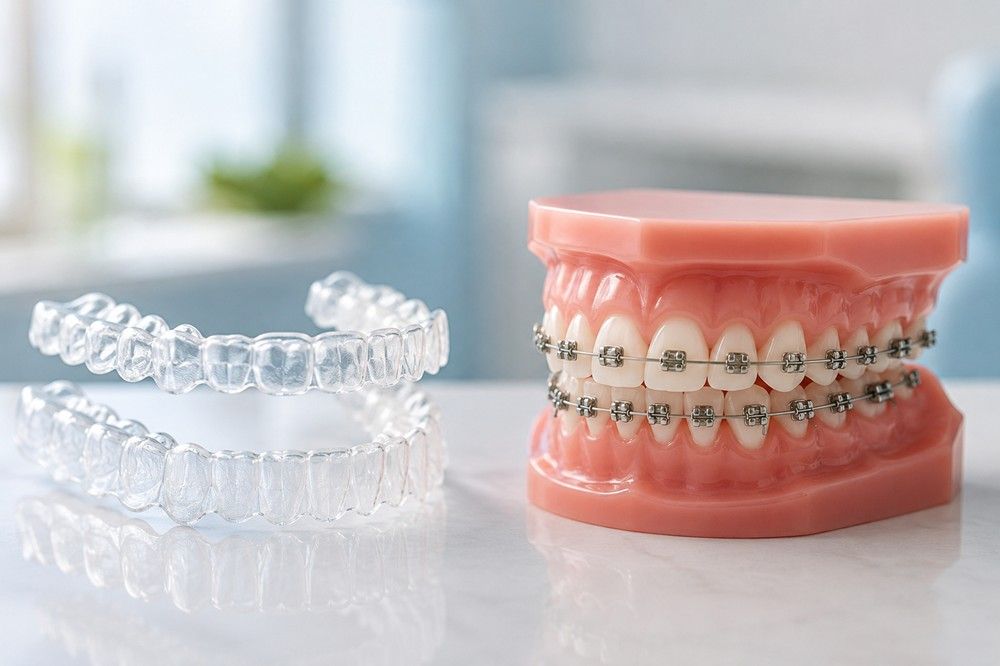
Invisalign is a modern way to straighten teeth using clear, removable aligners instead of metal wires. These aligners slowly move your teeth into the right position over time.
People often look for Invisalign near them because it is a more comfortable, less visible way to straighten their teeth.
Invisalign near you can help with:
- Crooked teeth
- Small gaps between teeth
- Mild bite problems
- Crowded teeth
- Teeth alignment issues
What are Traditional Braces?
Traditional braces use metal brackets and wires on the teeth. These parts slowly move the teeth into the correct position over time.
Braces are often recommended for:
- Severe crowding
- Complex bite problems
- Major tooth movement
- Long-term alignment issues
- Strong corrective treatment needs
They are fixed and cannot be removed during treatment.
Invisalign vs Traditional Braces: Key Differences
|
Factors |
Invisalign |
Traditional Braces |
|
Appearance |
Clear and less visible |
Metal and visible |
|
Comfort |
Smooth aligners |
Can cause irritation |
|
Cleaning |
Easy to remove and clean |
Harder to clean |
|
Food Restrictions |
Few restrictions |
Many restrictions |
|
Discipline Needed |
High (must wear regularly) |
Low (fixed in place) |
Which One Works Faster?
Invisalign and braces both work effectively, but the speed depends on the case.
- Invisalign may work faster for mild to moderate cases.
- Braces are better for complex or severe cases.
- Consistency affects results for both options.
A dentist near you can help decide which treatment timeline is suitable.
Comfort and Daily Life Differences
Comfort plays a big role when choosing between Invisalign and braces.
Invisalign offers:
- Smooth plastic aligners
- Easy removal for eating
- Less irritation in the mouth
- Easier brushing and flossing
Braces may cause:
- Mild discomfort after adjustments
- Food restrictions
- More careful cleaning is needed.
Which One is Better?
The answer depends on the dental condition.
- Invisalign is effective for mild to moderate alignment issues.
- Braces are more effective for complex tooth movements.
- Both improve smile appearance and oral health.
Neither is “better” for everyone; each works best in different situations.
Role of a Dental Professional in Choosing Treatment
A full dental check helps choose the best option for each person. A dentist may:
- Check how your teeth are aligned.
- Take digital scans or X-rays
- Talk about your treatment goals.
- Explain and compare options clearly.
- Suggest the best treatment plan.
Professional advice helps ensure the treatment is safe and effective.
Benefits of Invisalign
Invisalign is popular because it fits easily into daily life.
Key benefits:
- Nearly invisible appearance
- Removable trays
- Easier oral hygiene
- Fewer clinic visits
- Comfortable fit
It is a good choice for people wanting a flexible option.
Benefits of Traditional Braces
Braces are still widely used because they are strong and reliable.
Key benefits:
- Treats complex cases
- Constant tooth movement
- No need to remember to wear them
- Works for all age groups
- Long-term proven results
They are often used for more advanced dental corrections.
How to Decide Between Invisalign and Braces
Choosing the right option depends on a few things:
- How uneven the teeth are
- Your comfort and daily needs
- Budget and how long treatment takes
- Discipline in wearing aligners
- Dentist’s recommendation
A dental checkup helps you choose the best option.
Common Myths About Invisalign and Braces
Many people believe some wrong things about these treatments.
Common myths:
- Invisalign works for everyone (this is not always true)
- Braces are only for kids (adults can use them too)
- Treatment is always very painful (usually only mild discomfort)
- Results happen quickly (both treatments take time)
Knowing the real facts helps you have realistic expectations.
A Confident Smile Starts with the Right Treatment!
Invisalign and traditional braces both help straighten teeth, but they are used for different dental needs. The best option depends on your comfort, the complexity of your case, and your dentist’s advice. Book your appointment today with University of Calgary Dental Choice and take the first step toward a straighter, healthier, and more confident smile with expert orthodontic care.
FAQs
Is Invisalign more effective than braces?
Invisalign works well for mild to moderate teeth problems. Braces are often better for more complex cases. The best option depends on your teeth and your treatment needs.
How long does Invisalign treatment take?
Invisalign usually takes a few months to a couple of years. The time depends on how much your teeth need to move and how often you wear the aligners.
Do braces hurt more than Invisalign?
Braces can cause some soreness, especially after adjustments. Invisalign is usually more comfortable and smoother for most people.
Can i switch from braces to Invisalign?
In some cases, switching is possible, but it depends on how far the treatment has progressed and the dentist’s evaluation of your teeth.