
Why is gum disease important to understand? Bleeding gums, bad breath, or gum sensitivity during brushing are often early warning signs that should not be ignored. Visiting a dentist near you for early evaluation can help detect gum problems before they become more serious. Gum disease is a common oral health condition that usually develops slowly and may continue worsening without proper care.
Understanding the stages of gum disease is important because early treatment can help protect the gums, prevent tooth loss, reduce infection, and support better long-term oral health.
What is Gum Disease?
Gum disease is an infection that affects the gums and the tissues supporting the teeth. It usually begins with plaque buildup along the gumline. When bacteria are not removed properly, the gums may become irritated and inflamed. If you are looking for gum disease treatment near you, you may be dealing with symptoms such as swollen gums, bleeding while brushing, or ongoing bad breath.
Without treatment, gum disease may progress through several stages and become more serious over time.
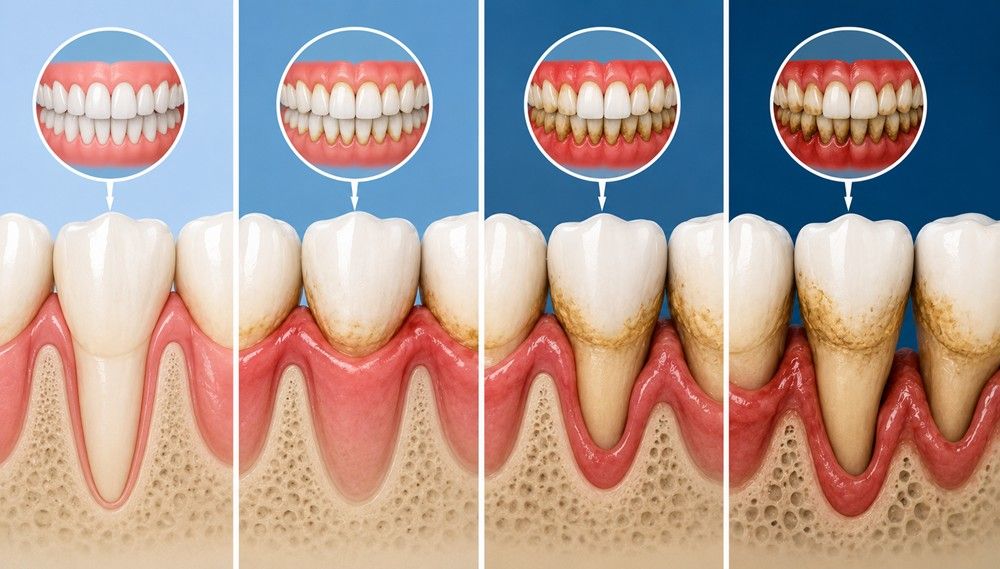
Stage 1: Gingivitis
Gingivitis is the initial and mildest form of gum disease. At this stage, the gums get irritated from the plaque and bacteria growing on the teeth.
Indications of gingivitis include:
- Red or swollen gums
- Bleeding while brushing or flossing
- Mild gum tenderness
- Bad breath
Gingivitis does not usually cause bone damage, which means it can often be improved with professional cleaning and better oral hygiene habits.
What Causes Gingivitis?
The chance of developing gingivitis has many causes.
Usual reasons consist of:
- Lack of proper oral hygiene.
- Buildup of plaque.
- Tobacco use.
- Mouth dryness.
- Specific health complications.
- Missing regular dental check-ups.
Early care is important because gingivitis can progress into more serious gum disease if left untreated.
Stage 2: Early Periodontitis
When gingivitis is not treated, bacteria may spread deeper below the gumline. This stage is called early periodontitis.
At this point.
- Gums start to pull away from teeth.
- Pockets form around the teeth.
- Bone support may begin to weaken.
You might notice more symptoms like greater gum bleeding and a persistent bad smell.
If untreated, early periodontitis might damage supporting tissues permanently, unlike gingivitis.
Stage 3: Moderate Periodontitis
Moderate periodontitis happens when a gum infection spreads deeper into the gums and bone.
Symptoms may include:
- Gums moving away from the teeth.
- Sensitive teeth
- Pain while eating or chewing
- Bigger gaps between teeth
- Strong bad breath
At this stage, the bone holding the teeth becomes weaker, which can make the teeth feel loose or less stable.
Stage 4: Advanced Periodontitis
Advanced periodontitis is the most serious stage of gum disease. The infection can badly damage the gums, bone, and tissues that support the teeth.
Common signs include:
- Loose teeth
- Severe gum recession
- Difficulty chewing
- Pus around the gums
- Tooth movement or shifting
Without treatment, tooth loss may occur because the supporting structures become too weak.
How Do I Know What Stage of Gum Disease I Have?
Many people ask, How do I know what stage of gum disease I have? A dental examination is the best way to determine the stage of gum disease because some symptoms are not always easy to notice at home.
A dentist can verify:
- Swollen gums.
- Measurements between teeth.
- Bone support levels.
- Receding gums.
- Possible infection signs.
The risk of long-term harm is lessened with a more effective treatment if diagnosed earlier.
How Gum Disease Is Treated
The treatment varies according to the severity and stage.
Include treatment options.
- Teeth Deep Cleaning.
- Cleanings under the gum line.
- Enhanced oral hygiene practices
- Antibacterial mouth rinses
- Regular gum health monitoring
More advanced cases may require additional dental procedures to help control infection and protect oral health.
Why Early Gum Care Matters
Gum disease often begins quietly, which is why early dental care is important. Small gum problems can become more serious if ignored for too long.
Getting treated early helps:
- Make gum inflammation less.
- Shield the aiding bone.
- Stop the loss of teeth.
- Enhance your Breath.
- Foster healthier gums for a longer duration.
Routine dental visits identify problems before they get much worse.
How to Help Prevent Gum Disease
Taking care of your mouth daily can help us in preventing gum disease.
Helpful habits.
- Brush two times a day.
- Use dental floss daily.
- Control craving for sugar.
- Refrain from smoking.
- Drink enough liquid.
- Do regular teeth checkups.
Consistent care helps reduce plaque buildup and supports healthier gums.
Give Your Gums the Care They Deserve for a Healthier Smile!
Understanding the stages of gum disease can help you notice early signs and get treatment before the problem becomes serious. Early dental care and good daily oral hygiene help keep your gums and teeth healthy for a long time. Book your appointment today with the University of Calgary Dental Choice for professional gum care and personalized oral health support.
FAQs
Is it possible to reverse gingivitis?
Professional cleaning, along with good oral hygiene habits, often makes gingivitis better.
Does gum disease hurt?
Because of the low compromises to health, you will not feel pain in early gum disease.
Can gum disease give rise to lost teeth?
Absolutely, advanced gum disease could compromise bone support and may result in tooth loss.
How often should gums be checked?
Regular dental visits help to evaluate gum health and can detect early signs of gum disease before it becomes a problem.